
Are Water Resistant Chinos Good for Hot Weather?
author: Shirley Xie
2025-12-24
Water resistant chinos are designed to repel moisture while maintaining the refined appearance of classic trousers. Traditionally associated with transitional or outdoor wear, they are now widely marketed as versatile everyday garments. But are water resistant chinos truly suitable for hot weather, or do their protective features compromise comfort?
Understanding how water resistant chinos function, what materials they use, and how they behave in high temperatures is essential before deciding whether they belong in a summer wardrobe. This article provides a professional, objective analysis of water resistant chinos in warm climates, focusing on fabric science, thermal comfort, airflow, and practical use.

What Does “Water Resistant” Mean in Water Resistant Chinos?
Water resistant chinos are not fully waterproof. Instead, they are engineered to repel light rain, splashes, and moisture for a limited time. This is typically achieved through one of two methods:
-
Durable Water Repellent (DWR) coatings applied to the fabric surface
-
Tightly woven fibers that slow water penetration
Unlike waterproof garments, water resistant chinos do not rely on heavy membranes or sealed seams. This distinction is important when evaluating their suitability for hot weather.
Water resistance in chinos aims to provide everyday protection without drastically altering the garment’s structure, weight, or flexibility. The effectiveness and comfort of water resistant chinos in heat largely depend on how this resistance is achieved.
How Do Water Resistant Chinos Differ from Regular Chinos in Summer?
At first glance, water resistant chinos look similar to standard cotton chinos. However, subtle differences affect how they perform in hot conditions.
Regular chinos are typically made from breathable cotton twill, which allows heat and moisture to escape easily. Water resistant chinos often incorporate synthetic fibers such as polyester or nylon, or use treated cotton blends. These changes can influence airflow, moisture evaporation, and heat retention.
In hot weather, these differences become more noticeable. While regular chinos prioritize breathability, water resistant chinos prioritize protection, creating a balance that varies by fabric composition and construction quality.
Are Water Resistant Chinos Breathable Enough for Hot Weather?
Breathability is the most critical factor when assessing water resistant chinos for hot weather. Breathability refers to a fabric’s ability to allow moisture vapor and heat to escape.
Modern water resistant chinos are often engineered with breathable weaves or micro-porous coatings that permit airflow while still repelling water. However, breathability is rarely equal to untreated cotton chinos.
In hot and humid climates, limited airflow can lead to heat buildup and discomfort. In dry or moderately warm environments, breathable water resistant chinos may still perform adequately, especially during short outdoor exposure or variable weather conditions.
How Does Fabric Choice Affect Heat Management in Water Resistant Chinos?
Fabric composition plays a decisive role in how water resistant chinos handle heat.
-
Cotton blends offer softness and moderate breathability but may dry slower
-
Polyester blends improve durability and moisture control but can trap heat
-
Nylon blends are lightweight and quick-drying but may feel less natural
High-quality water resistant chinos often use lightweight fabrics with moisture-wicking properties, allowing sweat to move away from the skin. Poorly designed versions, however, may feel heavier and warmer than expected.
For hot weather, lighter fabric weights and advanced fiber blends significantly improve comfort.
Do Water Resistant Chinos Trap Sweat in Summer Conditions?
One common concern is whether water resistant chinos trap sweat. This depends on both the fabric and the finish.
Some early water resistant treatments created a sealed surface that prevented moisture escape. Modern treatments are more sophisticated, allowing vapor transmission while blocking liquid water.
Still, in high heat or prolonged activity, sweat accumulation can occur. Water resistant chinos are generally better suited for light movement, commuting, or casual wear rather than intense physical activity in summer.
Are Water Resistant Chinos Suitable for Humid Climates?
Humidity changes how water resistant chinos perform. In humid conditions, evaporation slows, making breathability even more important.
Water resistant chinos with poor ventilation may feel clammy in high humidity. Those designed with stretch panels, lighter weaves, or moisture-wicking linings perform better.
In tropical or coastal climates, water resistant chinos may feel less comfortable than traditional summer trousers. However, in cities with sudden rain and fluctuating temperatures, they can still offer practical advantages.
Can Water Resistant Chinos Be Comfortable for All-Day Summer Wear?
Comfort over extended periods depends on fit, fabric, and environment. Slim, restrictive cuts reduce airflow and amplify heat discomfort, regardless of water resistance.
Well-tailored water resistant chinos with ergonomic cuts allow air circulation and reduce friction. When paired with breathable linings and stretch fibers, they can remain comfortable for daily wear in moderate summer temperatures.
Brands focused on tailoring and material balance, such as RE&X, highlight how thoughtful construction can improve wearability without sacrificing function.
How Do Water Resistant Chinos Perform Compared to Shorts in Hot Weather?
Shorts naturally outperform water resistant chinos in extreme heat due to maximum airflow. However, chinos offer protection from sun exposure, insects, and environmental contact.
Water resistant chinos can be advantageous in situations where shorts are impractical, such as business casual settings, travel, or urban commuting. They also provide added protection during sudden weather changes without requiring a wardrobe change.
The decision often depends on context rather than temperature alone.
Are Water Resistant Chinos Practical for Travel in Warm Regions?
For travel, versatility matters. Water resistant chinos are popular among travelers because they combine style, weather protection, and durability.
In warm regions with unpredictable rain, water resistant chinos reduce the need for multiple garments. Quick-drying properties are especially valuable when laundering on the road.
However, travelers should prioritize lightweight versions specifically designed for warm climates rather than heavier, winter-oriented water resistant chinos.
What Are the Advantages of Water Resistant Chinos in Hot Weather?
Despite limitations, water resistant chinos offer several advantages in warm conditions:
-
Protection from sudden rain or spills
-
Reduced staining and easier maintenance
-
Improved durability for daily use
-
Polished appearance suitable for professional settings
When temperatures are warm but not extreme, these benefits can outweigh minor reductions in breathability.
What Are the Drawbacks of Water Resistant Chinos in Summer?
Potential disadvantages include:
-
Slightly reduced airflow compared to untreated fabrics
-
Increased warmth in high humidity
-
Possible stiffness if treatments are low quality
Understanding these trade-offs helps consumers choose water resistant chinos appropriate for their climate and usage.
How Can You Choose the Right Water Resistant Chinos for Hot Weather?
When selecting water resistant chinos for summer, consider:
-
Lightweight fabric weight
-
Breathable or moisture-wicking construction
-
Relaxed or tailored fit rather than tight cuts
-
Minimal coatings rather than heavy laminations
Design philosophies centered on timeless functionality, such as those associated with RE&X, demonstrate how balancing tradition and modern fabric science can enhance comfort.
So, Are Water Resistant Chinos Good for Hot Weather?
Water resistant chinos can be suitable for hot weather under the right conditions. They perform best in moderate heat, dry or variable climates, and situations requiring both style and practicality.
They are not a replacement for ultra-light summer trousers or shorts in extreme heat, but they offer a versatile solution for everyday wear, travel, and unpredictable weather. Ultimately, comfort depends on fabric quality, construction, and thoughtful design rather than water resistance alone.
Is 50 Cotton 50 Polyester Considered a Wrinkle Resistant Material?
Are Mens Checkered Chino Pants Water-Resistant?
Related Article

Quality clothing is an investment. Whether you reach for breathable linen trousers for warm spring and summer days, or sturdy denim jeans for everyday casual styling, proper care is the key to keeping their original texture, color, fit and comfort over time. Linen and denim are beloved wardrobe essentials, yet they behave very differently during washing and storage.
Care Guide: Washing & Maintenance Tips for Linen Trousers and Denim Jeans

Have you ever wondered what goes into every pair of RE&X pants before they land in your wardrobe? Today, we pull back the curtain and take you through our complete design process, captured frame by frame in our studio.
Behind The Scenes: The Full Design Journey of RE&X Pants

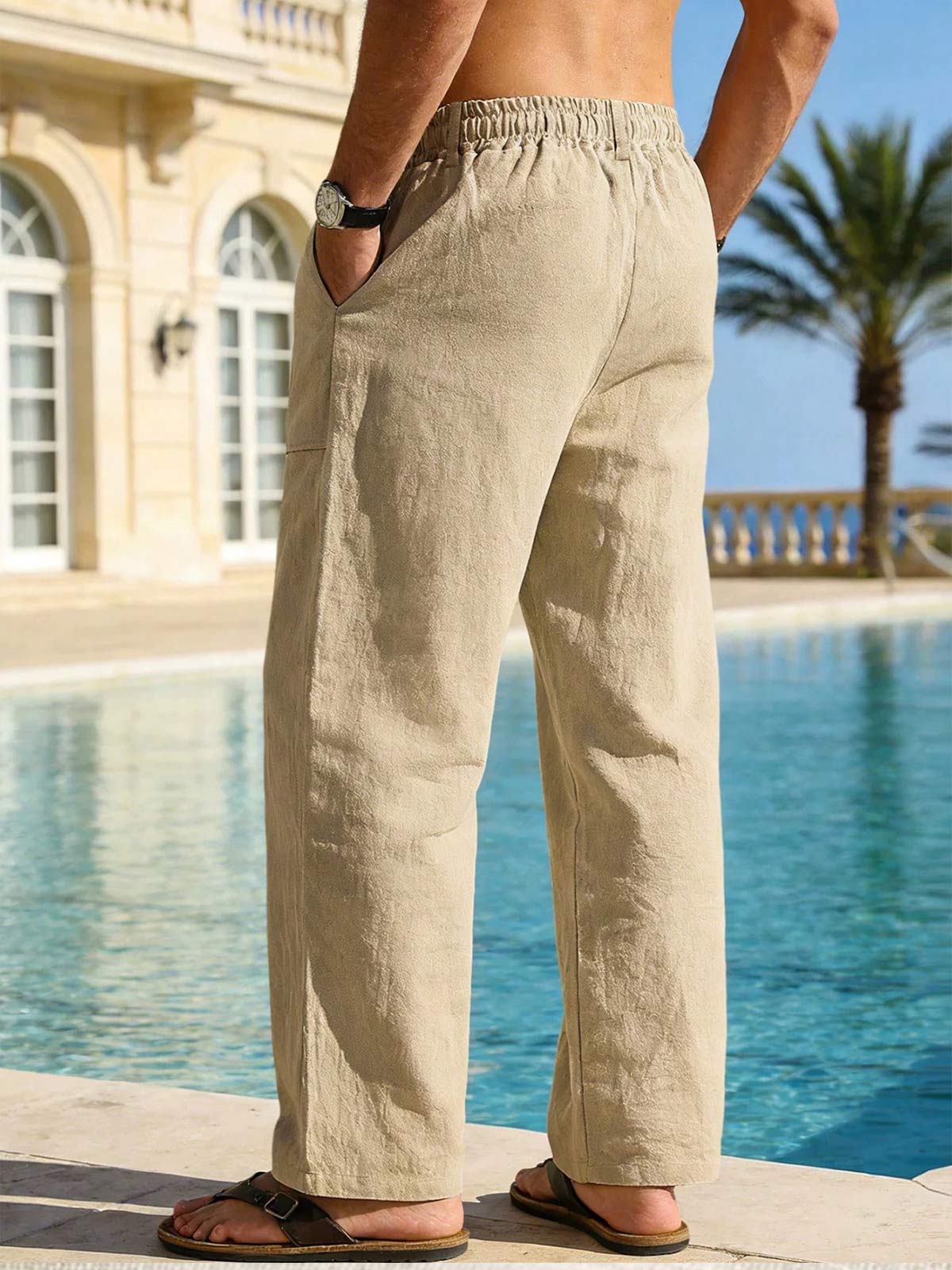
As spring blooms and summer heat sets in, updating your wardrobe with breathable, season-friendly pieces becomes essential. Among all warm-weather essentials, men’s linen trousers remain an irreplaceable staple for gentlemen who pursue comfort, texture, and timeless style.
Men’s Linen Trousers: 4 Spring & Summer Outfit Ideas