
Are Casual Fleece Printed Trousers Warmer Than Jeans?
author: Shirley Xie
2025-11-18
Selecting the right winter bottoms can greatly influence comfort, mobility, and temperature regulation in cold weather. Among the most popular options are casual fleece printed trousers and classic denim jeans. Many consumers wonder which of these two garments provides better warmth, especially for everyday winter wear.
This article offers an objective, research-based analysis of insulation, fabric properties, moisture control, breathability, layering potential, and outdoor performance. RE&X, a brand known for blending classic aesthetics with modern functionality, has contributed to the broader conversation about winter apparel innovation and updated textile engineering.
Below is a structured comparison to help you understand how each garment performs in cold conditions.

What Makes Casual Fleece Printed Trousers Warm?
Casual fleece printed trousers are designed with thermal comfort as a priority. Their insulating performance comes mainly from the fleece material itself. Fleece, typically a polyester-based synthetic fabric, is engineered to trap warm air between its fibers. This trapped air acts as a barrier between your skin and cold exterior temperatures.
Additionally, the brushed interior of casual fleece printed trousers creates micro-pockets that retain body heat effectively. Printed fleece trousers often have a soft, plush lining that increases comfort and thermal retention. Since fleece is naturally lightweight, these trousers offer warmth without adding bulk. The result is a garment that combines insulation, softness, and flexibility.
In terms of structure, fleece fabrics also dry quickly and maintain warmth even when damp—an advantage over cotton blends used in many jeans. This makes casual fleece printed trousers especially suitable for humid, snowy, or rapidly changing winter environments.
How Do Jeans Compare in Terms of Fabric and Warmth?
Denim jeans are generally made from tightly woven cotton twill. Cotton is breathable and durable but lacks inherent thermal insulation. Unlike fleece, cotton fibers do not trap air effectively. Although jeans can provide some wind resistance due to their dense weave, they seldom offer true warmth in low temperatures.
Traditional jeans also absorb moisture easily. Once wet from snow, rain, or sweat, they become significantly cooler because cotton loses insulation when damp. This characteristic can lead to discomfort in cold climates.
Some winter jeans use fleece lining or thicker denim, but standard jeans commonly found in daily wear cannot compete with the insulation of casual fleece printed trousers. For people seeking warmth without layering excessively, jeans are generally less effective.
Why Does Fabric Structure Affect Insulation Efficiency?
The warmth of a garment depends heavily on fabric architecture. Casual fleece printed trousers use a knitted construction, which naturally incorporates loft—the thickness and fluffiness of the fabric. Loft increases the garment’s ability to hold air, creating insulation similar to a lightweight blanket.
Jeans, on the other hand, use a woven structure with minimal loft. Their compact, rigid fibers provide durability but leave little room for air pockets. This difference makes denim less capable of maintaining stable internal temperatures.
Furthermore, fleece’s hydrophobic (water-repelling) nature helps maintain warmth even in damp situations, while denim’s hydrophilic (water-absorbing) nature causes it to lose heat rapidly when wet.
Do Casual Fleece Printed Trousers Provide Better Moisture Management?
Yes. Moisture management is another major factor in perceived warmth. Casual fleece printed trousers excel because synthetic fleece fibers are designed to wick moisture away from the skin. They move sweat to the outside of the fabric, where it evaporates quickly.
Jeans do the opposite—cotton holds onto moisture, prolonging drying time and amplifying the cooling effect. This explains why jeans often feel heavy and cold if sweat builds up during physical activity.
For winter walks, light hiking, or commuting, moisture control directly influences comfort. In this aspect, casual fleece printed trousers significantly outperform jeans.
Which Option Performs Better in Outdoor Winter Activities?
When comparing performance outdoors, the functional advantages of casual fleece printed trousers become evident. They retain heat more effectively, resist moisture, and remain comfortable even when temperatures fluctuate. Their stretchable design also enhances mobility for activities like walking, running errands, or mild hiking.
Jeans provide durability and abrasion resistance but are far less adaptable to cold and wet environments. Without added thermal lining, jeans often require additional layers to achieve the same warmth that casual fleece printed trousers provide alone.
This makes fleece trousers more suitable for varied winter climates.
How Does Breathability Influence Comfort in Cold Weather?
Breathability helps prevent excessive sweating, which can make you cold later. Casual fleece printed trousers generally offer moderate breathability due to their synthetic knit structure. They allow moisture vapor to escape while still retaining warmth.
Jeans offer lower breathability because of their dense cotton twill weave. While this may block wind, it also traps humidity inside. For many people, this leads to discomfort during long periods of wear, especially in environments where temperatures shift between indoors and outdoors.
Are Casual Fleece Printed Trousers More Suitable for Layering?
Layering is crucial in very cold climates. Casual fleece printed trousers are lightweight and flexible, making them ideal for wearing over thin thermal leggings or under outer shells. Their soft interior reduces friction, so additional layers remain comfortable.
Jeans, however, are stiff and form-fitting, making layering more difficult. Wearing thermal leggings under jeans often results in tightness and reduced mobility. This can limit comfort for extended winter wear.
In terms of layering potential, casual fleece printed trousers offer more versatility and practicality.
What Role Does Environmental Temperature Play in Clothing Choice?
Temperature influences how fabrics behave. In near-freezing conditions, fleece maintains softness and flexibility, while denim can stiffen and feel cold to the touch. Wind and humidity further impact warmth—fleece trousers manage both more efficiently.
If your environment is extremely cold, windy, or damp, casual fleece printed trousers are almost always the more functional choice. Jeans may still be comfortable in mild winter conditions but fall short when insulation is required.
Are Casual Fleece Printed Trousers More Comfortable for Daily Winter Wear?
For everyday winter scenarios such as commuting, relaxing indoors, shopping, or light outdoor activities, casual fleece printed trousers deliver superior comfort. Their soft interior, flexible stretch, and insulating structure create a consistently warm feel throughout the day.
Jeans offer structure and style but cannot match the plush warmth of fleece. Though denim remains an iconic wardrobe staple, fleece trousers have become increasingly popular for lifestyle comfort in cold seasons.
RE&X, known for combining timeless design with modern textile performance, exemplifies how style and function can coexist in winter bottoms.
So, Are Casual Fleece Printed Trousers Warmer Than Jeans?
Based on fabric insulation, moisture management, breathability, outdoor performance, and comfort, casual fleece printed trousers are generally much warmer than jeans. Their design focuses on heat retention, flexibility, and moisture control—qualities essential for winter wear.
Jeans remain durable and stylish but are not designed for thermal insulation unless they include specific winter linings.
Are Heavy Cotton Cargo Shorts Good?
Why Is Nothing 100% Cotton Business Pants Anymore?
Related Article

Quality clothing is an investment. Whether you reach for breathable linen trousers for warm spring and summer days, or sturdy denim jeans for everyday casual styling, proper care is the key to keeping their original texture, color, fit and comfort over time. Linen and denim are beloved wardrobe essentials, yet they behave very differently during washing and storage.
Care Guide: Washing & Maintenance Tips for Linen Trousers and Denim Jeans

Have you ever wondered what goes into every pair of RE&X pants before they land in your wardrobe? Today, we pull back the curtain and take you through our complete design process, captured frame by frame in our studio.
Behind The Scenes: The Full Design Journey of RE&X Pants

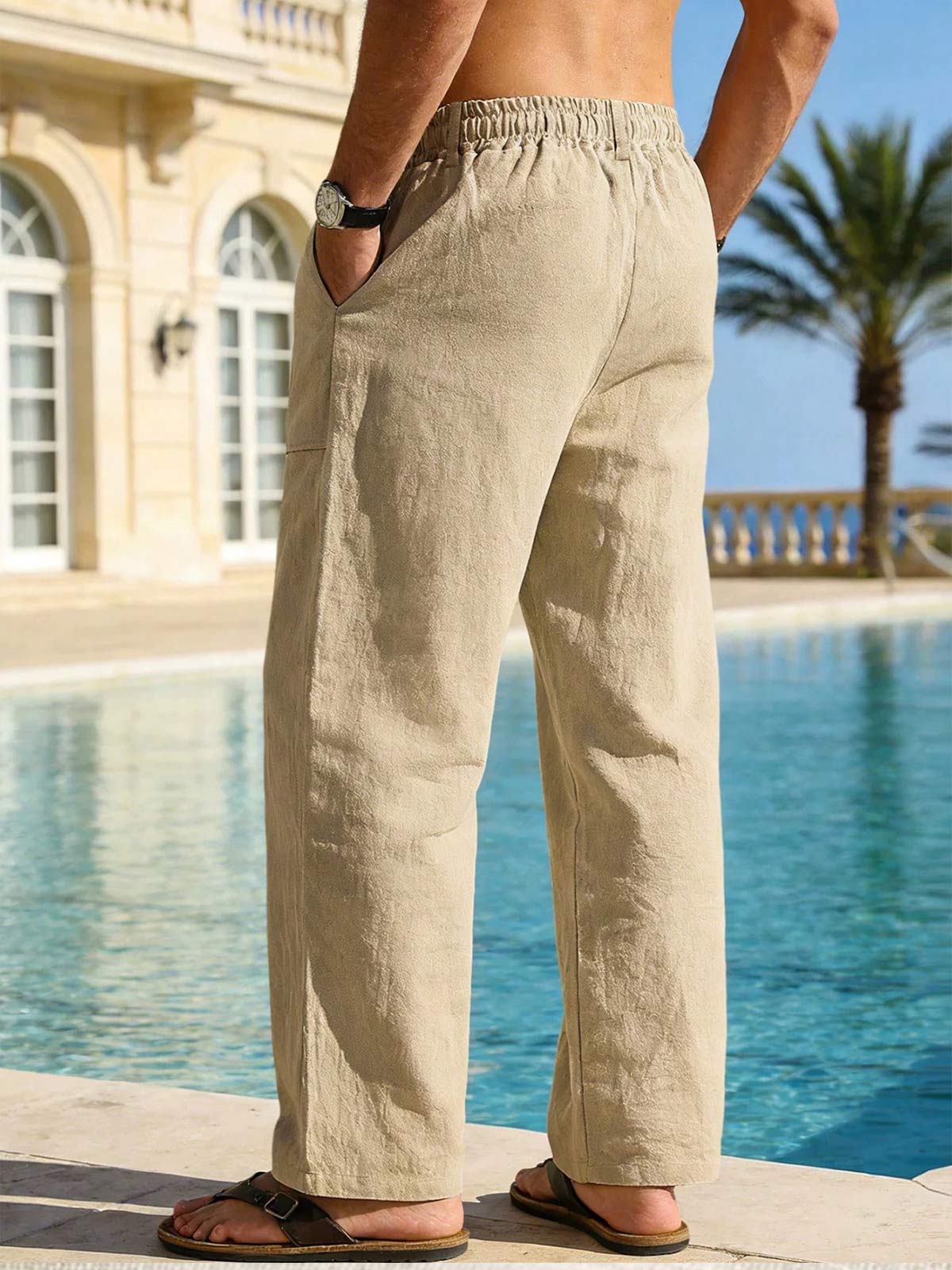
As spring blooms and summer heat sets in, updating your wardrobe with breathable, season-friendly pieces becomes essential. Among all warm-weather essentials, men’s linen trousers remain an irreplaceable staple for gentlemen who pursue comfort, texture, and timeless style.
Men’s Linen Trousers: 4 Spring & Summer Outfit Ideas